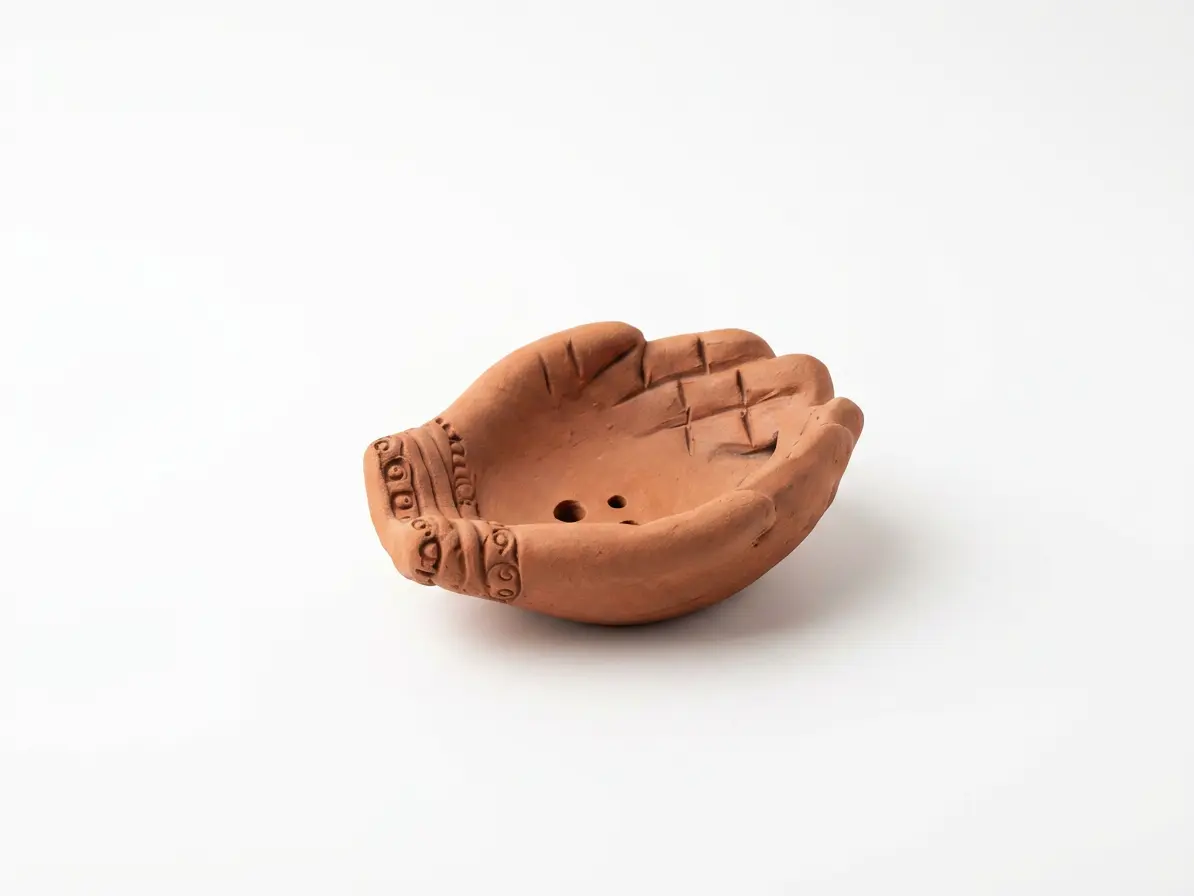
Approx. 8 × 5.5 × 3 cm / 3.15 × 2.17 × 1.18 in.
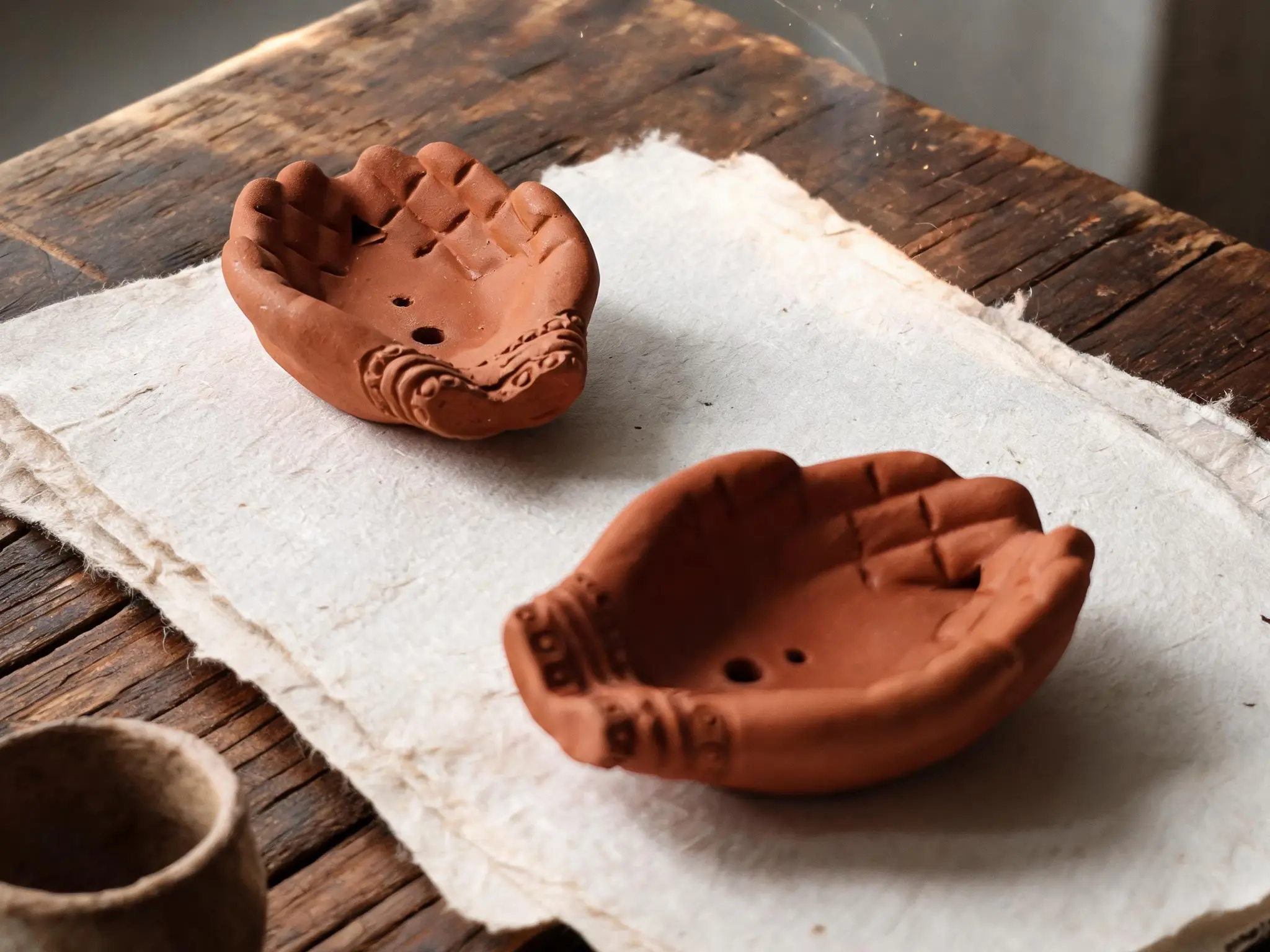
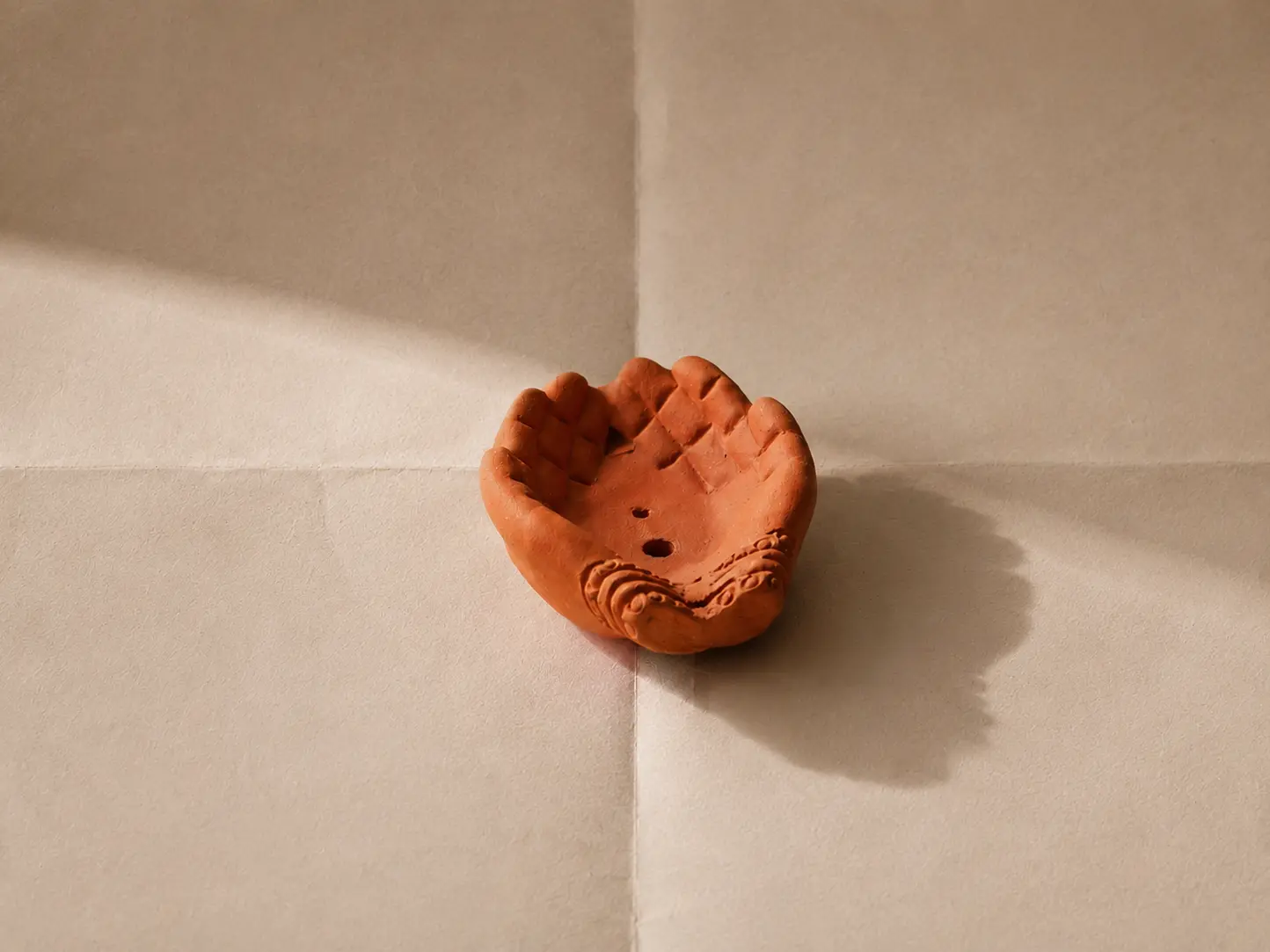
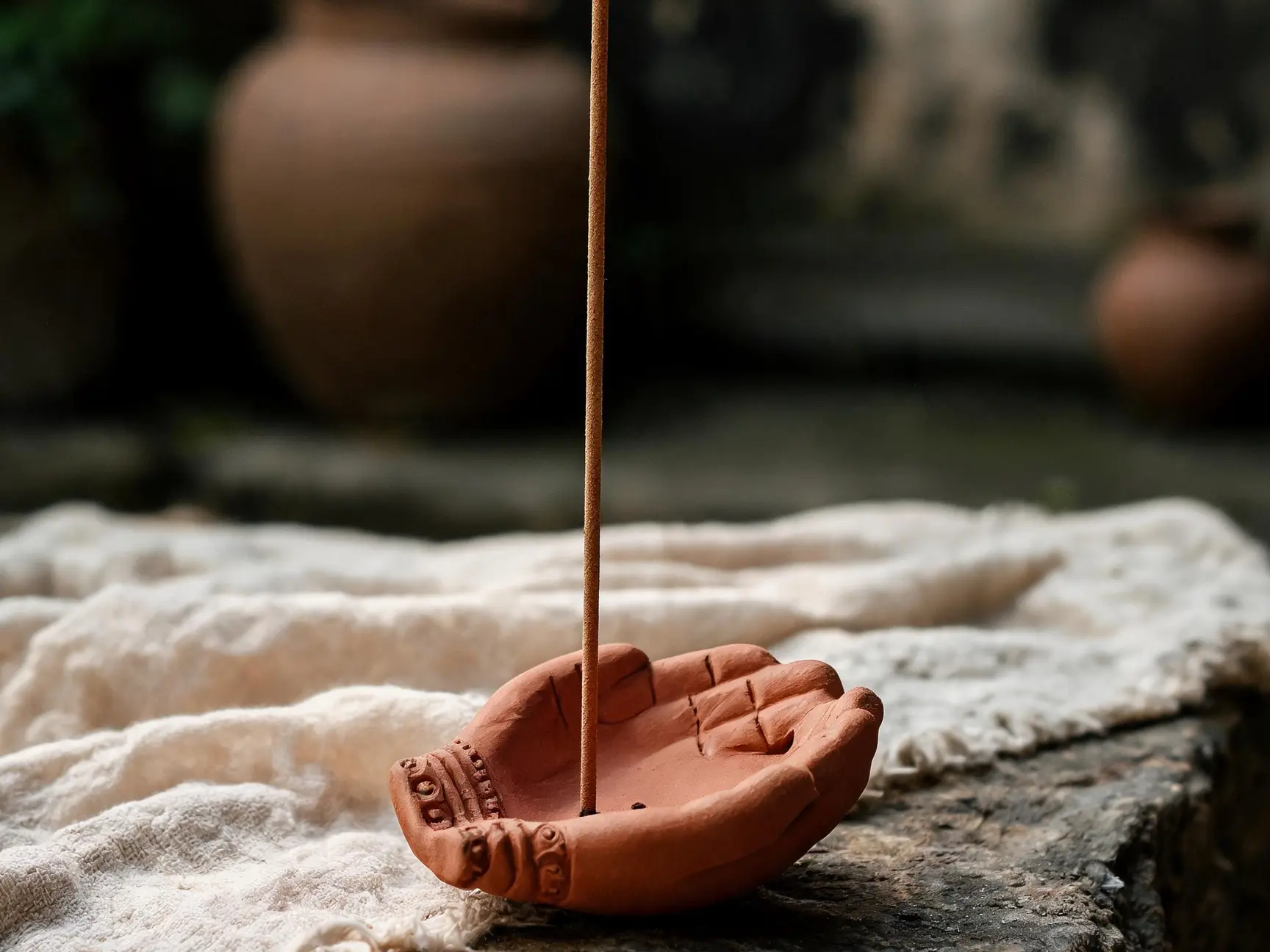
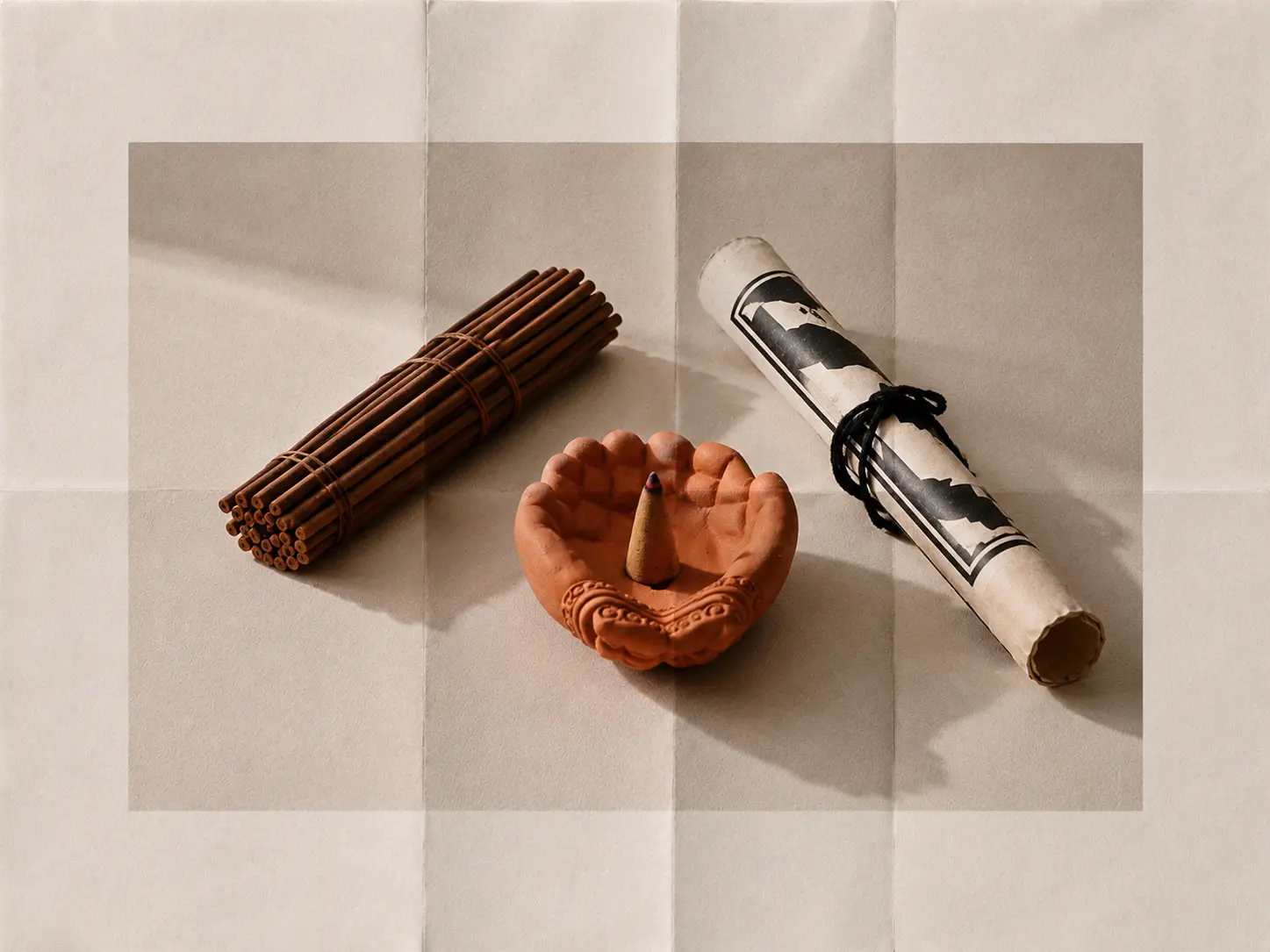
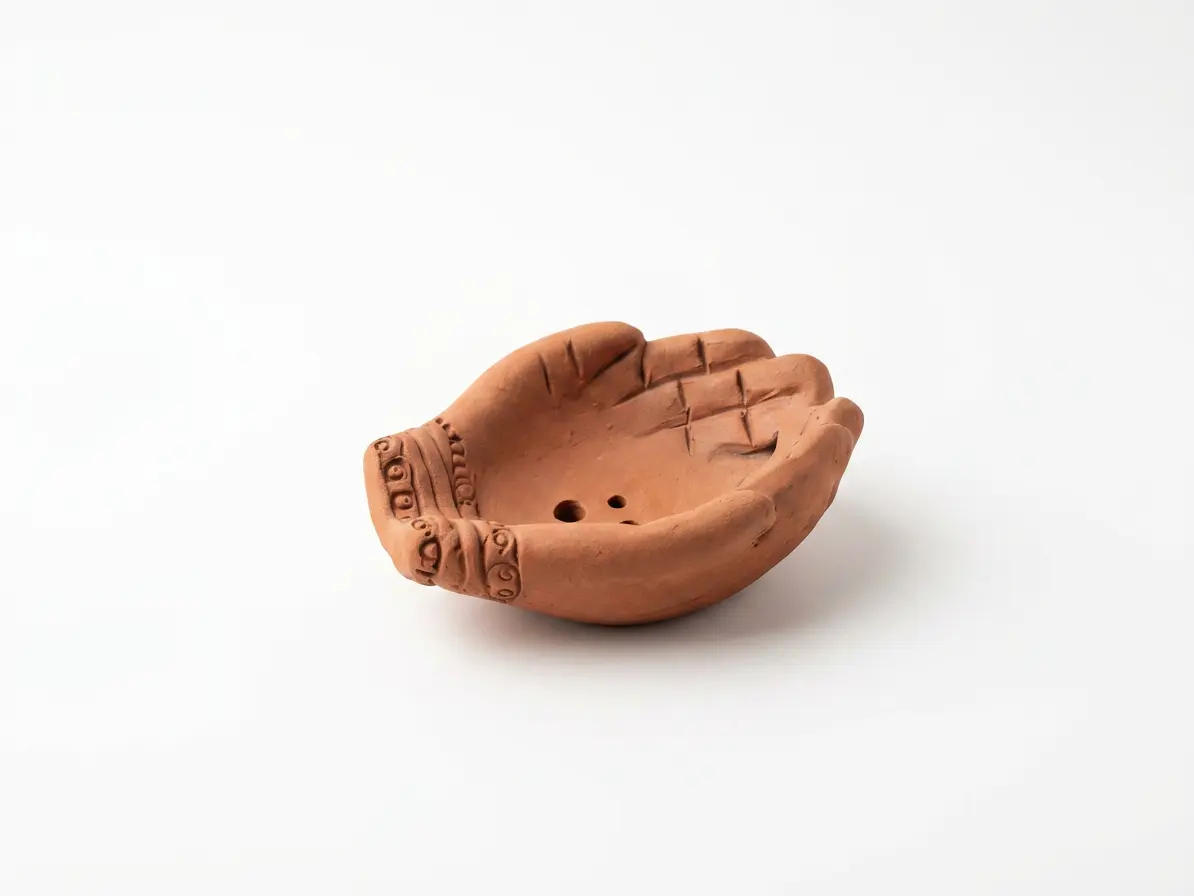
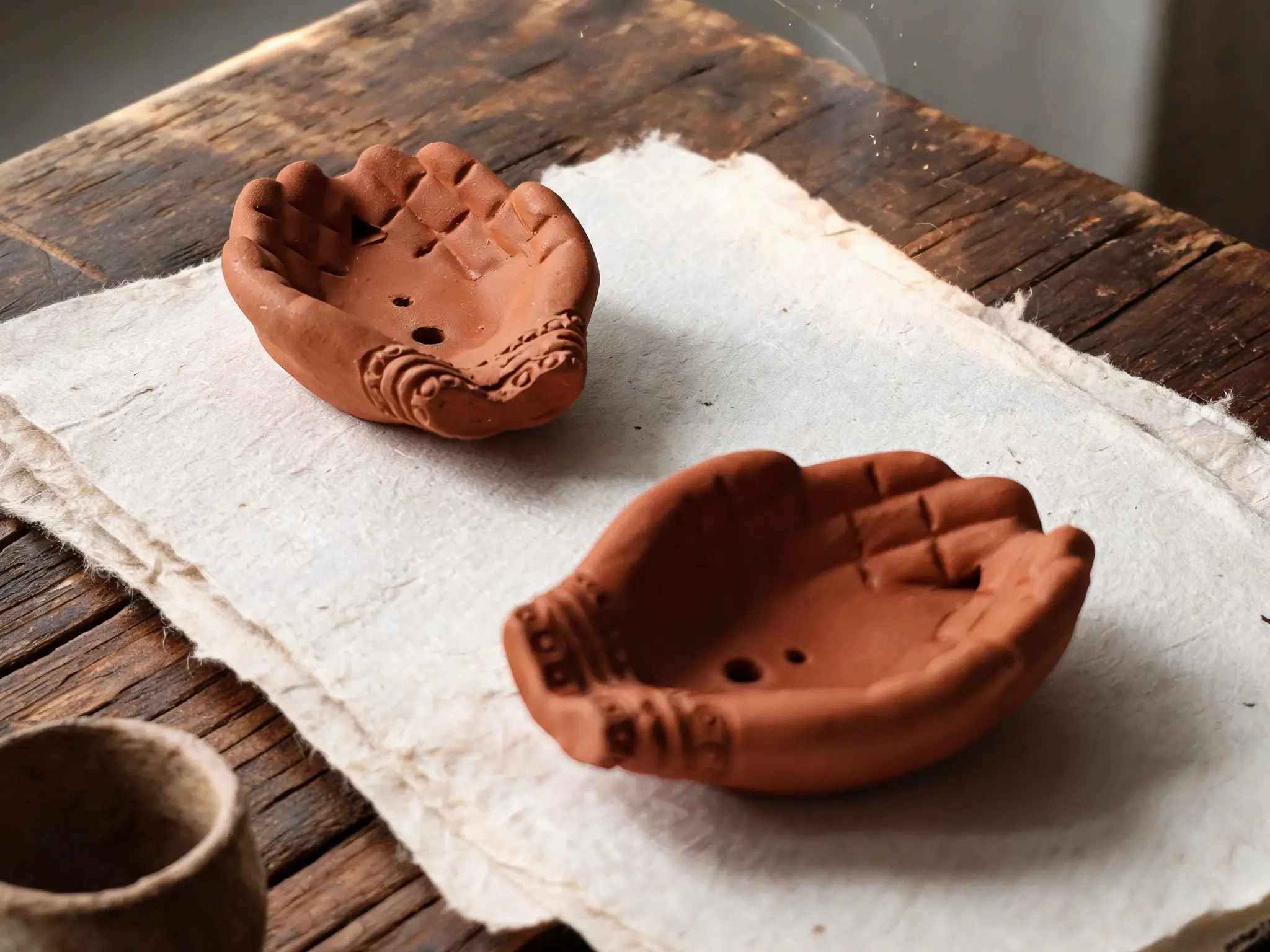
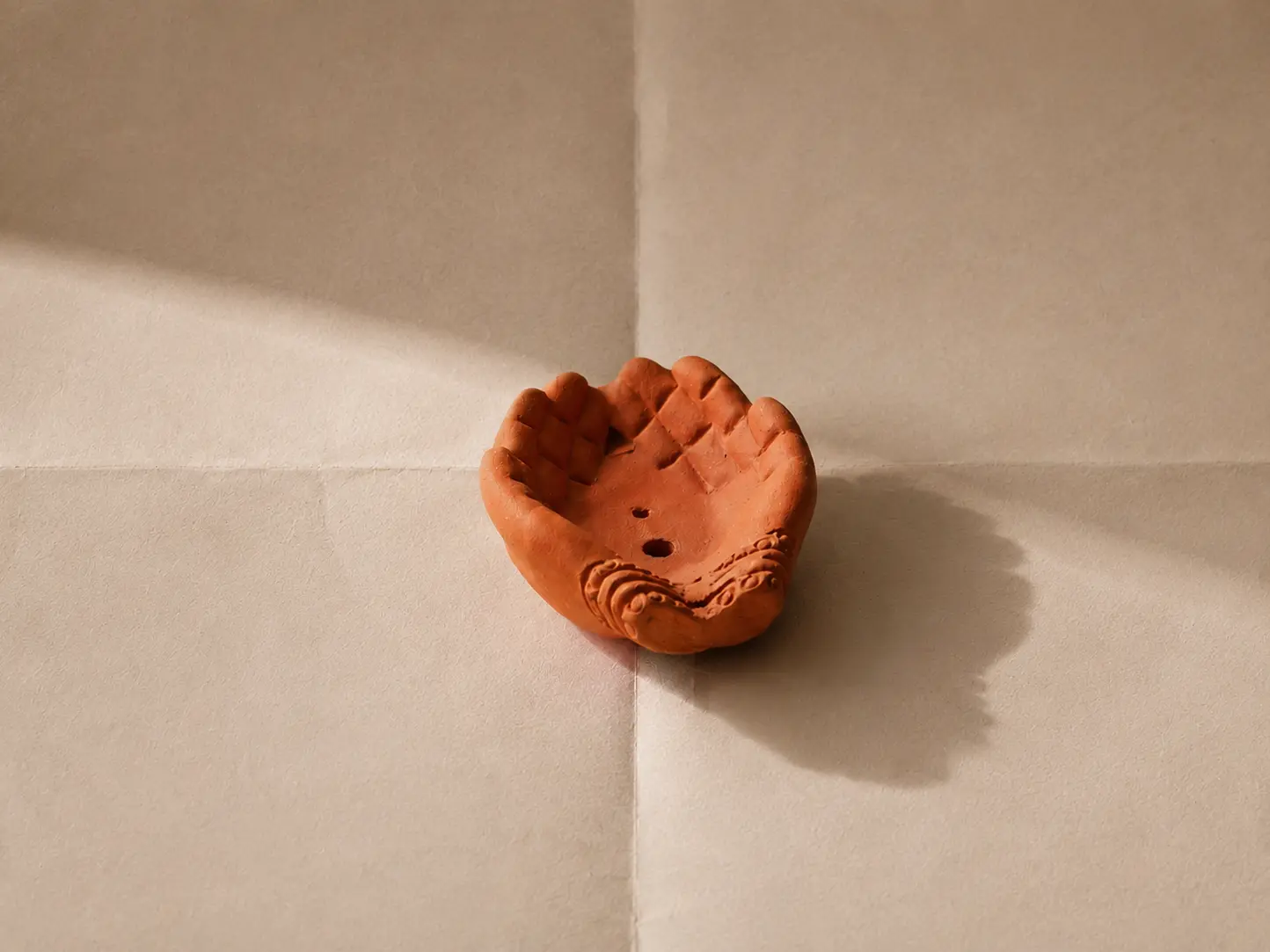
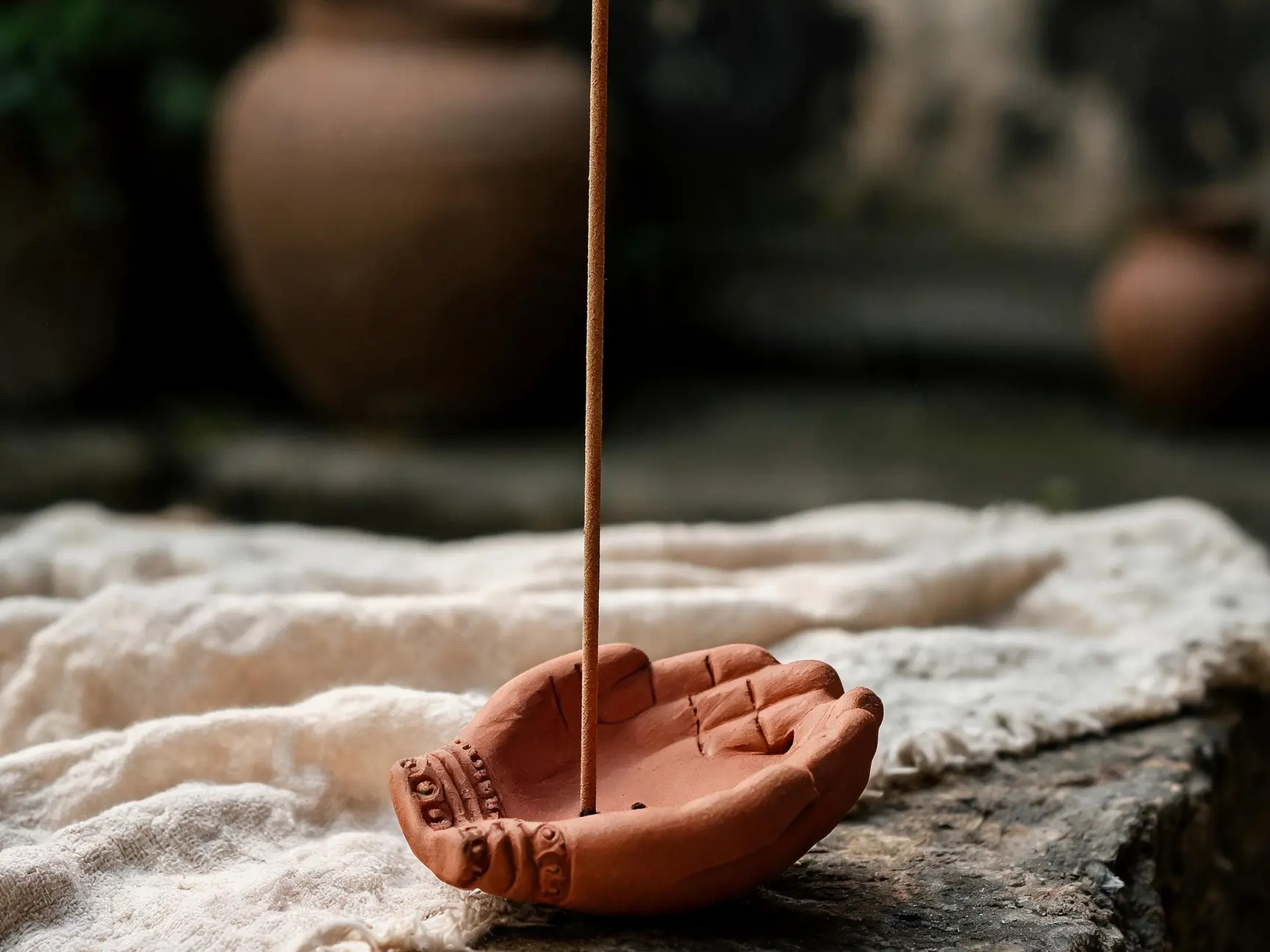
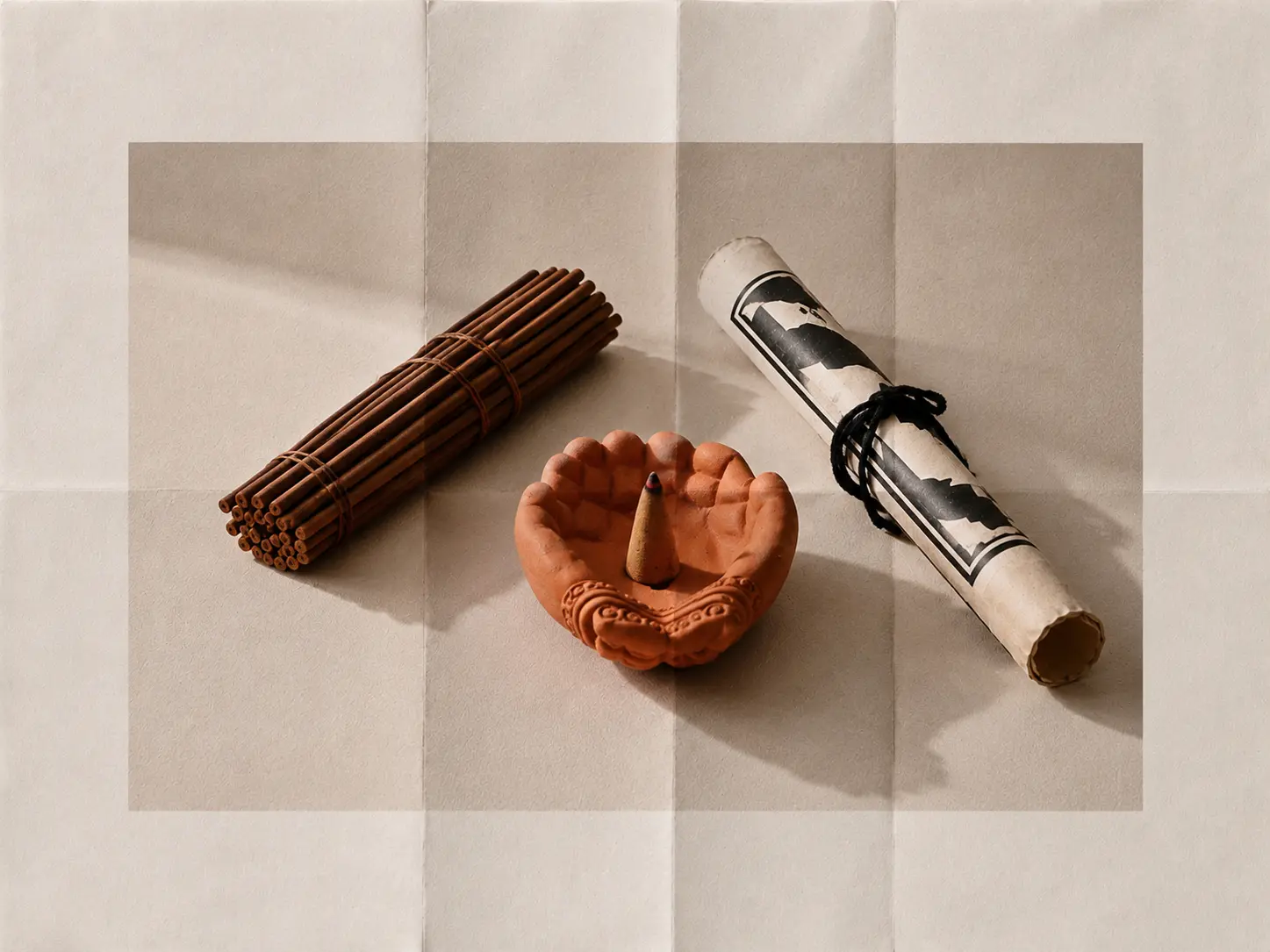
Pema is a handmade red clay incense holder from Bhaktapur in Nepal’s Kathmandu Valley. Shaped like an open hand, it combines warm terracotta tones with a subtle metallic shimmer and visible handcrafted details.
Named after the Tibetan word for “lotus,” Pema brings a gentle sense of care to everyday incense rituals. Its palm-like bowl and openings provide a resting place for suitably sized incense sticks.
Natural variations in the clay, surface finish, and firing marks give each piece its own character. These small differences are part of its handmade nature, rather than imperfections to be hidden.
Use it for a quiet moment with incense, or display it as a small pottery object on a desk, bedside table, or tea table.
Use
- Place the incense securely in a suitable holder. Light the tip, then gently blow out the flame.
- Store in a cool, dry place away from direct sunlight and heat.
Shipping & Returns
Packaging - FSC-certified, recyclable paper box and insert.
Shipping - Dispatches from Shanghai within 7–15 business days.
Returns - Unopened and unused items are eligible for return.
Free shipping over $75
Eco-conscious packaging
Secure checkout
Made the slow way
Handcrafted by artisans in Nepal
Carried forward from time-honored Nepalese ceramic craft, made by local artisans. Each piece is shaped one at a time.
Ancient Path to Modern Peace
Traditions carried through generations bring a sense of trust to what we light today. Gentle smoke and a soft, natural aroma make this ancient practice easy to live with every day.

Incense Holder FAQ
Practical answers to choosing an incense holder, catching falling ash, and keeping your daily ritual simple and safe.
How do I know whether an incense holder will fit my sticks?
Choose an incense holder by the type of stick it supports and how securely it holds it—not by appearance alone. Bamboo-core incense is supported by its exposed bamboo end, while coreless incense needs support for the incense material itself. Labels such as Tibetan, Japanese, or Indian do not guarantee a standard fit.
Check the product’s compatibility details before ordering. Before lighting, make sure the stick is stable in the intended position. If it is too tight, too loose, or likely to tip, use a better-matched holder rather than forcing it into place or modifying the holder. Contact us if you need help checking a particular incense stick.
Why does ash still fall outside my incense holder?
An ash-catching holder may not collect every particle. The stick’s length and angle affect where ash falls, while fans and strong drafts can carry it beyond the catching surface. A holder that supports a stick securely is not necessarily wide or long enough to catch all its ash.
Position the stick as intended by the holder’s design and check that the area beneath it is protected. Keep the room ventilated without directing a fan at the burning incense. A larger heat-resistant, non-combustible surface underneath can help protect furniture from stray ash.
How do I burn incense without a bamboo core, and why is a small end left over?
Use a holder specifically suitable for coreless incense. These sticks do not have a separate bamboo end, so the incense material itself must be supported. Handle them gently and do not force them into an opening that is too narrow.
A small unburned end may remain where the stick touches or sits inside the support. This can be normal: contact with the holder may stop the ember before the entire stick is consumed. Let the holder and remaining piece cool completely before removing it, and do not burn loose fragments on a surface that is not intended for them.
Could my incense holder be causing the stick to go out?
The holder can contribute if the burning section touches a surface or if an enclosed design does not provide suitable airflow for that incense. However, a stick going out can also result from moisture or an ember that was not fully established.
Follow both the incense maker’s lighting instructions and the holder’s intended setup. Check that the burning section has the clearance it needs, and avoid strong direct drafts. If only the short section inside the support remains unburned, that does not necessarily indicate a problem with the holder.
What is the easiest way to clean ash and residue from an incense holder?
Let the incense, ash, and holder cool completely first. For an open tray, gently tip loose ash into a waste container without blowing on it or knocking the holder against the bin. For enclosed designs, follow the instructions for opening or removing the ash-catching part.
Cleaning methods depend on the material and finish. Use a soft brush or cloth only where suitable, and check the care instructions before washing, soaking, or using cleaning products. Do not assume every ceramic, metal, stone, or wooden holder is dishwasher-safe. For persistent residue, ask for care guidance rather than scrubbing or scraping the surface.
Can the same holder burn incense sticks, cones, backflow cones, and resins?
Only if the holder is explicitly designed for those uses. A stick holder is not automatically suitable for cones or loose resins, even when it is made from ceramic, stone, or metal. Different incense forms place heat on different parts of the burner.
Backflow cones need a compatible backflow burner for the smoke effect. Resins burned over charcoal require a burner specifically suitable for charcoal and its concentrated heat. Check the product’s intended use before switching incense types; material alone is not proof of compatibility.
Is an incense holder enough to protect a wooden table from heat and ash?
Do not assume an incense holder alone will protect furniture from heat, embers, or stray ash. Protection depends on the holder’s design, the incense being used, and the surface beneath it. Unless the product instructions confirm otherwise, use a stable, heat-resistant, non-combustible protective surface.
Keep burning incense away from table edges, curtains, paper, children, and pets. Do not leave it unattended, and allow the holder to cool before moving or cleaning it. Felt pads or decorative mats may prevent scratches, but they should not be treated as heat protection.